This article was drafted by AI from makers' published specifications and general product-category knowledge. Turtleglint has not tested any product listed here. Fit statements link to the maker's own compatibility page. Prices are not available for this article and are not stated.
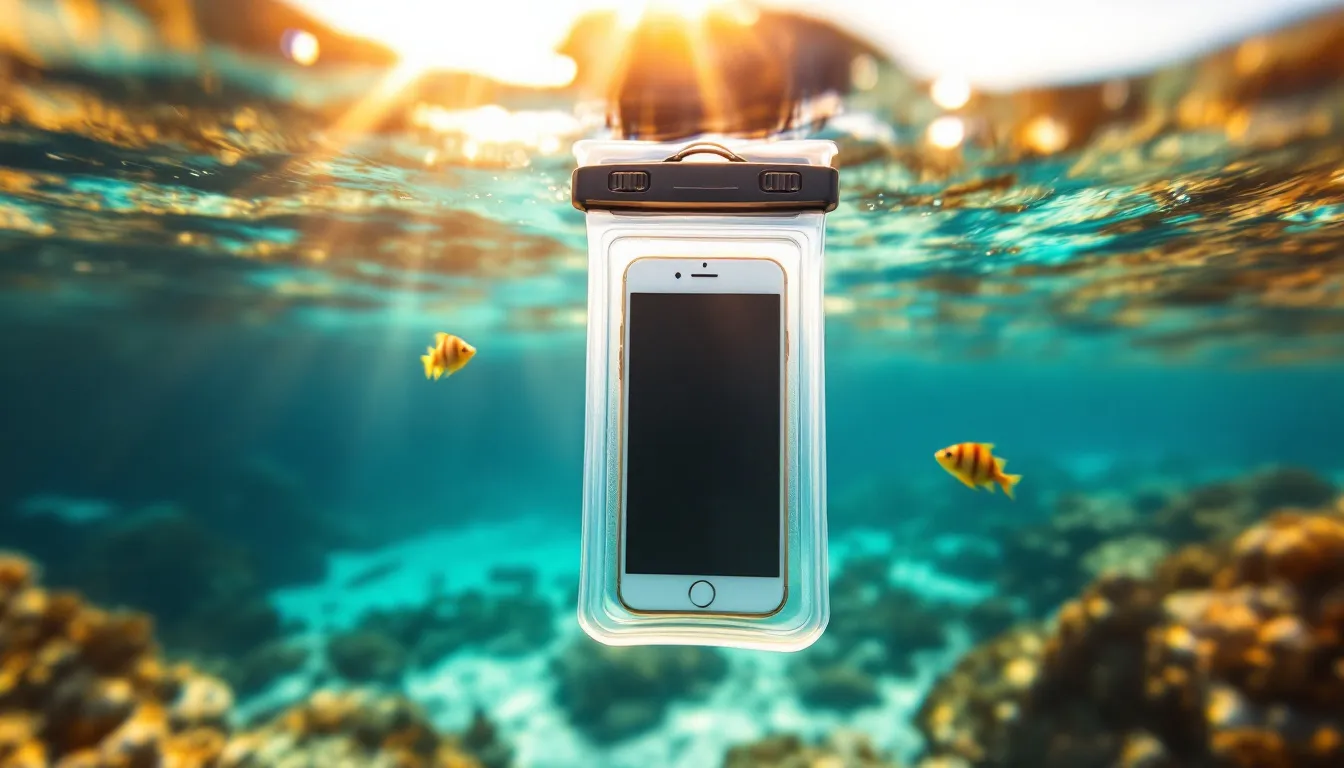
A waterproof phone pouch is a sealed bag, usually made from clear PVC or TPU, that keeps your phone dry when you swim, snorkel, or paddle. The good ones close with a secure locking seal, carry an IPX rating from the maker, and state the maximum depth they're rated for. Most pouches on the market are rated between 30 and 100 feet, though the maker's stated depth is the only number that matters. A Ziploc bag has no rating and will fail when you need it most. Your phone likely cost a month's rent. The right pouch costs far less than a replacement.
This guide covers how pouches work, whether they actually stay watertight, how to pick one for your phone (including Samsung and large Android devices), how to use it without flooding, and where to find one.
Do Waterproof Phone Pouches Actually Work?
Yes, a rated waterproof phone pouch works when it's closed correctly and used within the depth the maker states. Many users report flooding, though. Almost every one traces back to an incomplete seal, a damaged closure, or going deeper than the rating allows.
IPX ratings are a straightforward scale. IPX7 means the pouch can be submerged to one metre for 30 minutes. IPX8 means the maker rated it for deeper, longer submersion, with the exact depth listed in the specs. A splash-only rating (IPX4 or IPX5) handles rain and spray but isn't designed for full submersion.
There are two broad categories:
Splash-proof pouches use a roll-top or simple fold-down seal and are rated for rain, splashes, or very shallow dips. Fine for kayaking or keeping a phone dry on a boat. Not rated for snorkeling.
Submersible pouches use a double or triple locking seal, often a zip-lock with a secondary clip, and carry an IPX7 or IPX8 rating. These are what you want for snorkeling or freediving to the maker's stated depth.
One honest note: makers don't always publish a seal lifespan. They typically advise inspecting the seal before each use and replacing the pouch if the closure feels loose or shows wear. Many users report the seal degrades faster in saltwater if the pouch isn't rinsed clean after each session. No maker consulted for this article stated how many uses before replacement; treat the seal as something to check every single time.
Can a Ziploc Bag Waterproof Your Phone?
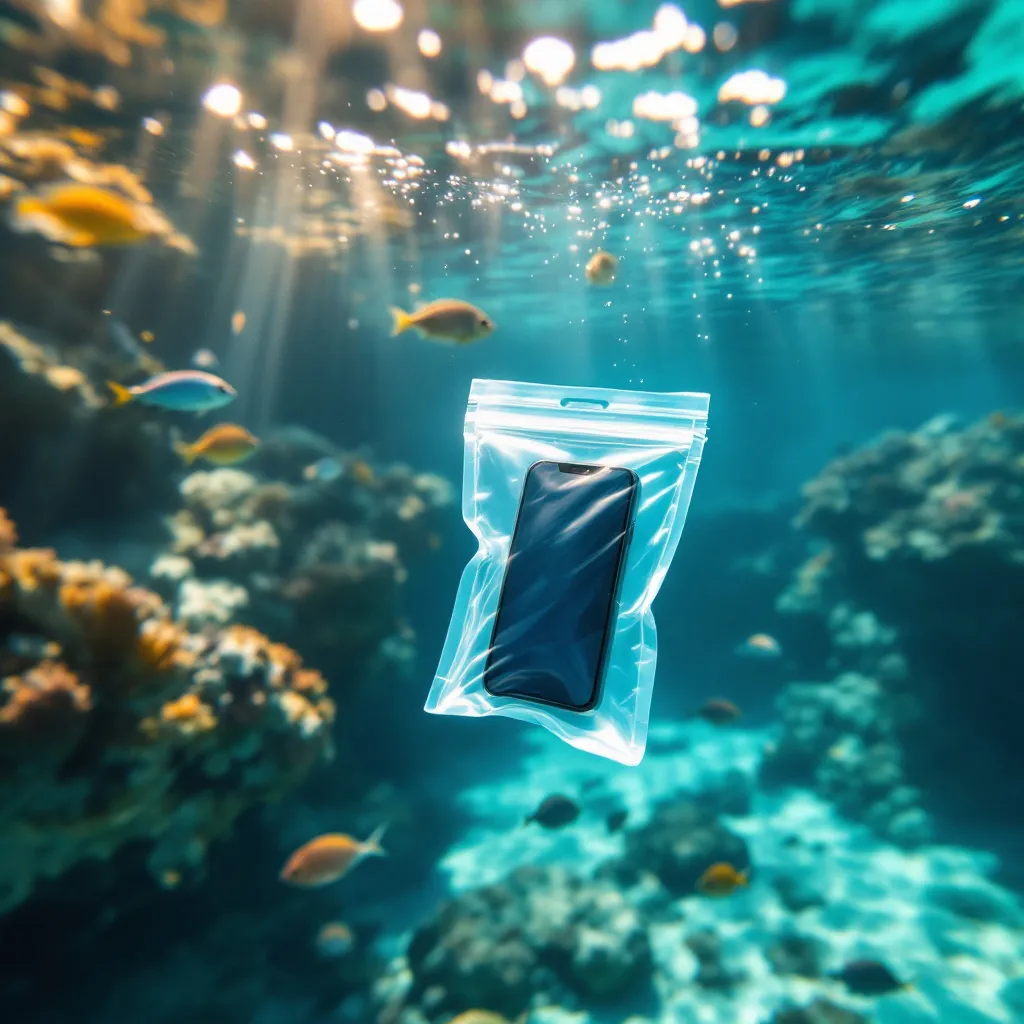
A standard Ziploc bag cannot reliably waterproof your phone for snorkeling. It has no IPX rating, which means no maker has tested it to any submersion standard. The seal wasn't designed for water pressure, and it opens under very little stress.
The key fact is the absence of an IPX rating. When a product carries no rating, the manufacturer hasn't submitted it for waterproofing testing. That's not minor. It means you have no verified depth figure, no verified submersion time, and no guarantee the seal will hold once it's a few centimetres below the surface.
In practice, a Ziploc bag might keep a phone dry if you drop it briefly in shallow water at a pool edge. Many users report it fails at exactly the moment they needed it most, because the bag flexes as you move and the seal slowly admits water. There's no way to predict when it will fail.
For anything more than a dry bag in a beach bag, choose a rated pouch. The cost difference between a Ziploc and an entry-level IPX8 pouch is tiny. The cost difference between a dry phone and a flooded one is not.
Types of Waterproof Phone Protection for Swimming
For swimming and snorkeling, you have four main options: a soft pouch, a hard case, a dedicated underwater housing, and a waterproof phone used alone. Each suits a different situation.
| Type | Typical Depth Rating | Best For | Key Limitation |
|---|---|---|---|
| Soft waterproof pouch (TPU or PVC) | IPX7 to IPX8 (maker-stated; often 30 to 100 ft) | Snorkeling, beach days, kayaking | Touch responsiveness varies underwater; lanyard can break |
| Hard waterproof case (polycarbonate shell) | Maker-stated; often to 6 ft or 2 m | Poolside, shallow dips, everyday carry | Bulky; depth rating often lower than soft pouches |
| Dedicated phone housing (clear acrylic or polycarbonate, sealed ports) | Maker-stated; often 60 to 200 ft | Snorkeling and scuba photography | Higher cost; model-specific fit |
| Waterproof smartphone (used without any extra case) | Maker-stated; varies by phone model | Casual pool use | Most phone IP ratings don't cover salt water or prolonged submersion |
A soft pouch is the right first step for most snorkelers. It's affordable, works with almost any phone that fits inside, and is easy to pack. A hard housing is worth the extra cost if you plan to shoot photos and video regularly underwater, because it gives you better camera access, clearer lens coverage, and a more rigid structure that's easier to hold while swimming.
If you freedive repeatedly below the surface or shoot in conditions where the gear is under real stress, a dedicated phone housing is more reliable than a soft pouch. Pouches flex with depth and pressure in ways a rigid housing doesn't.
Compatibility: Will a Waterproof Pouch Fit Your Samsung or Android Phone?
Most soft waterproof pouches fit a wide range of phones, including Samsung Galaxy models and large Android devices, because they size by internal dimensions rather than by phone model. The key is to measure your phone and compare those measurements to the maker's stated interior dimensions before you buy.
Here's the practical approach:
- Measure your phone's length, width, and thickness in millimetres. If you use a protective case, measure with the case on first, then check whether the pouch maker says to remove it.
- Find the pouch's stated internal dimensions on the maker's product page.
- Confirm your phone (or phone plus case) is smaller than those dimensions on every axis.
Samsung Galaxy Ultra models and similarly large Android phones often need a pouch labelled for "XXL" or "large" phones. Standard pouches typically state a maximum phone size. If the maker doesn't list your exact model, that doesn't mean it won't fit. It means the maker hasn't confirmed the fit. Check the maker's own compatibility page or contact their support team.
Removing your phone case before inserting the phone into the pouch is usually a good idea. Many pouches fit a naked phone but not a phone in a chunky case. The maker will state whether a case is compatible. If they don't say, assume you need to remove it.
On phone-plus-wallet pouches: some larger pouches are marketed to hold a phone and a few cards or cash alongside it. These work in theory, but adding extra items places more stress on the seal and changes the internal volume. Only use a pouch this way if the maker explicitly states it's designed for that purpose, and check that your phone still fits the touch window properly after the extra items are added.
Makers don't always name every compatible phone model. When the maker doesn't state it, Turtleglint will say so plainly: not stated by the maker.
How to Choose the Right Waterproof Phone Pouch
Choosing the right pouch comes down to four decisions: depth rating, phone size, access features, and how you'll carry it.
The four buying factors:
- Depth rating: Match the pouch's maker-stated depth to your planned activity. Casual beach snorkeling at the surface needs at least IPX7. Snorkeling where you surface-dive needs a pouch rated to at least the depth you plan to reach, as stated by the maker.
- Phone size: Measure your phone. A pouch that's too small won't close properly, which is a flooding risk.
- Touch and camera access: Check whether the clear front window lets you tap the screen and whether the camera lens area is clear and flat enough for usable photos. Some pouches have a distorting curved window that affects image quality.
- Lanyard: A lanyard loop lets you wear the pouch around your neck while in the water. Confirm the lanyard is included and rated for water use. A flimsy cord is a common point of failure.
On phone-plus-wallet use: if you want to carry cards or cash in the same pouch as your phone, look for one that explicitly states it's designed for that. A phone-only pouch stuffed with extra items is harder to seal and easier to flood.
Decision rule for depth: for snorkeling where you stay near the surface, an IPX7-rated pouch is a reasonable starting point. If you freedive repeatedly below three metres, look for a pouch with a higher maker-stated depth rating, or consider a dedicated phone housing instead. Always check the maker's compatibility page before ordering.
How to Use a Waterproof Phone Pouch Without Flooding Your Phone
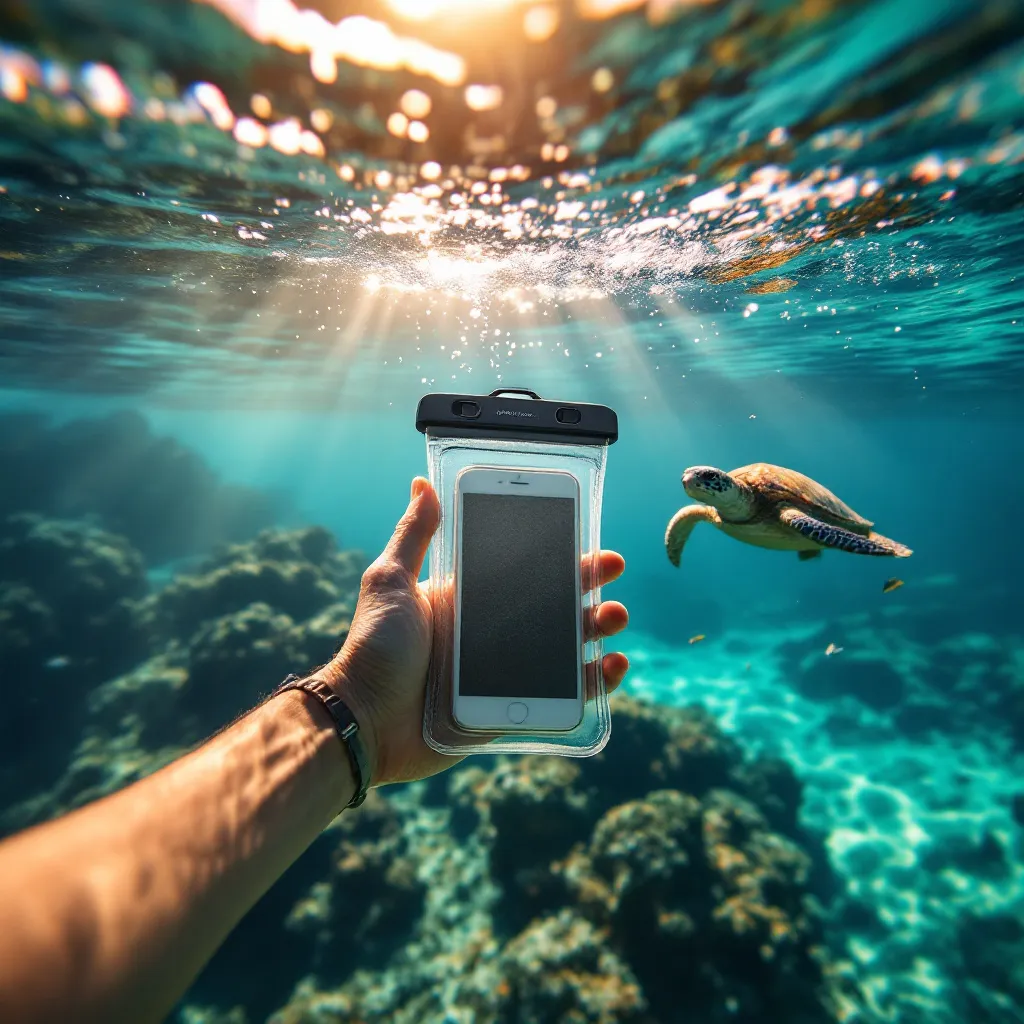
Using a phone pouch correctly is what separates a dry phone from a ruined one. The single most important rule: close the seal completely before the pouch touches water, and never open it while the outside is wet.
Follow these steps every time:
- Start dry. Dry your hands and the outside of your phone completely before inserting it into the pouch.
- Insert the phone. Slide the phone in with the screen facing the clear window. Centre it so the camera aligns with the lens area.
- Squeeze out air. Press gently on the pouch to remove excess air before closing the seal. Air inside can cause it to float awkwardly and adds pressure to the seal.
- Close the seal fully. Work from one end of the closure to the other, pressing the lock firmly across its full length. If there's a secondary clip or buckle, close it. Run your finger along the seal a second time to confirm it's locked.
- Do a dry test first. Before entering water, hold the sealed pouch above your head and press gently on it. If air escapes from the seal, it's not closed properly. Don't enter the water until the seal holds.
- Stay within the rated depth. Don't exceed the depth the maker states. Water pressure increases with depth and will defeat a seal rated for shallower water.
- Rinse after saltwater. Rinse the outside of the pouch with fresh water after every saltwater session, then dry it before storing. Many users report seal degradation when salt crystals are left in the closure.
- Open only when fully dry. Dry the outside of the pouch thoroughly before opening the seal. This is the step most often skipped, and it's the most common cause of flooding.
On touch responsiveness: touch screens work through most TPU and PVC pouches, but sensitivity varies by phone model and pouch thickness. Many users report that touch works fine for photos but is less reliable for precise taps. Test in a dry environment before your swim.
Where to Buy a Waterproof Phone Pouch
Waterproof phone pouches are easy to find online and in physical stores. Online retailers carry the widest selection, let you filter by depth rating and phone size, and display customer reviews that can highlight seal problems before you buy.
For local purchasing, you have several options:
- Dive shops and water sports retailers often stock rated pouches alongside other snorkeling and diving gear. Staff can usually answer basic questions about depth ratings.
- Outdoor and adventure retailers carry pouches in their kayaking, camping, and water sports sections.
- Airport travel shops commonly stock basic waterproof pouches, though the selection is limited and the depth ratings aren't always prominently stated.
- Pharmacy and supermarket chains near beach resorts sometimes carry entry-level pouches in the summer season.
Always check the maker's website before buying anywhere. The maker's product page will state the exact depth rating, internal dimensions, and any compatibility information. If those details aren't on the packaging in a local shop, look the product up on your phone before purchasing.
No price data is available for this article; check the maker's current list price on their website or on the retailer's product page.
Frequently Asked Questions
Do waterproof phone pouches actually work as intended? Yes, when closed correctly and used within the maker's stated depth. Most flooding incidents trace back to an incomplete seal closure or exceeding the rated depth, not to the pouch itself failing. Check the seal before every use.
Can a standard Ziploc bag provide adequate waterproofing for a phone? No. A Ziploc bag carries no IPX rating and hasn't been tested for any submersion standard. It may keep a phone dry briefly in very shallow water, but it's not reliable enough for snorkeling. A rated pouch is a much safer choice.
What is the best waterproof phone cover option for swimming? For surface snorkeling, a submersible soft pouch rated IPX7 or higher by the maker is practical and affordable. For repeated freediving or underwater photography, a rigid phone housing gives you better seal reliability and camera access.
What waterproof phone solutions are compatible with Samsung devices? Most soft pouches fit Samsung Galaxy phones by dimension rather than by model name. Measure your phone's length, width, and thickness, then compare to the maker's stated internal dimensions. Large Samsung models may need a pouch explicitly sized for large or XXL phones.
Can a single pouch hold both a phone and wallet while staying waterproof? Some larger pouches are designed for this purpose and state it explicitly. Only use a pouch as a phone-plus-wallet combination if the maker says it's rated for that use. Adding items not accounted for in the design places extra stress on the seal.
What waterproof phone protection options exist for Android phones? Android phones, including large models from Google, Sony, and Samsung, fit into dimension-based soft pouches. Check the maker's internal dimensions against your phone's measurements. If the maker doesn't name your exact model, that's not a confirmed fit; contact the maker or check their compatibility page.
Where can waterproof phone pouches be purchased locally? Dive shops, outdoor retailers, and airport travel shops often stock them. Selection and depth-rating transparency vary. Checking the maker's website before buying locally ensures you have the right rating and size information.
The Right Pouch Keeps the Moment, Not Just the Phone
Three decisions cover almost everything: pick a pouch with a maker-stated depth rating that matches your activity, confirm the internal dimensions fit your phone, and close the seal completely before the pouch touches water. Get those three right and the pouch does its job.
The reason any of this matters is the moment you're trying to reach: a turtle passing slowly underneath you, light rippling across the sand, a reef fish holding still just long enough. Your phone is the camera you already have. A rated waterproof pouch is what lets you point it at something worth remembering and press the button without worrying.
Check the maker's compatibility page before you order, rinse the pouch after every saltwater session, and inspect the seal every time. Those habits cost nothing and protect a phone that cost quite a lot.
For more help matching gear to the camera you own, see all guides on underwater camera gear.